It is often said that Madan Mohan received more recognition and acknowledgement of his contribution after his demise. Indeed, his colleagues, the media, his fans, were lavish in praise for the late composer in all the tributes they paid him when he died and continue to give him respect even more than 30 years later. Respect for Madan Mohan has only escalated over the years as more and more people discover his music and the impact it had on the listeners.
With about a hundred songs to my credit, I had already made in the film industry when a journalist asked me about my favourite music composer. Without a moment's hesitation, I replied, Madan Mohan. "I would love to work with him". I added "If any producer gives me the opportunity, I will do that film free of cost".
Many years passed by after that event. Several of my songs had become popular and I earned considerable name and fame for myself in the industry. But, I had not yet obtained an opportunity to work with Madanji.
In 1971-72, producer Ram Dayal called up and asked me to meet him in his office. When I reached there he explained "I am producing a film called Prabhat and would like you to work with Madanji" From the way he put forth the proposal it was clear that he had read my interview. Ram Dayal reminded me, "As you may recollect..." I agreed. "Oh yes, of course I remember what I had said in the interview, I shall do the film free of cost" Saying so, I left the place. While leaving, Mr.Dayal made a request "I shall give you a cheque with a signing amount. Please, could you give it to Madanji on my behalf and sign him for the film?"
I considered it an honour to go to Madanji's place and sign him for the film. But I could not resist myself from asking: "What amount are you offering Madanji"
"Twentyfive Thousand rupees"
Shocked, I said "I am sorry, I cannot go to him with such a small amount. In my opinion he deserves a much bigger amount. Now it is up to you to decide".
By the end of this episode, I got the feeling that I will never be offered this film. A month later, Ram Dayalji called up to say "I have signed Madanji for my film. He would like to meet you tomorrow at 11.00 am in his music room. Please go and meet him"
As I was meeting Madanji for the first time, I thought he might want to listen to my shayari first and then assess me. I prepared myself accordingly. While going to his music room, I was working on the lyrics in my mind.
Madanji was extremely punctual. When he gave an appointment to anybody, he would be ready five minutes before time. During the meeting he would speak only about work and on completion of work he would see off the guest immediately. It was a very disciplined approach. When I met him, he said "I called you today because I am leaving for London tonight and will return only after one month, a day before the recording. As this is the first time we are working together, I have no idea how long you would take to write the lyrics. I suggest that you ask the producer and the director to explain the situations in the film where songs are required and prepare yourself accordingly. On my return, we shall start working immediately - probably the very next day after coming back. We shall record one song per day".
I asked him "Would you not like to listen to some of my lyrics?" "No need", he replied "I have heard your songs at Jaidevji's place. Your lyrics have appealed to me and therefore I have accepted to work with you".
Jaidevji and Madanji were very close friends. I, on my part, had a great tuning with Jaidevji, as a result of which, I did a lot of films with him. Later on, I learnt that Jaidevji often praised my shayari while talking to Madanji. To put it plainly, Jaidevji did play a role in brining Madanji and me together. That was the end of my first meeting with Madanji.
Exactly after a month, on the day before Madanji's return to India, his assistant Ramlal Suri called me up. He said "Madanji will arrive tonight and has requested for a meeting tomorrow at 11.00 am. The day after tomorrow, your song will be recorded. Please come on time to the music room tomorrow".
You may not believe this, but till then I had never taken a tape recorder for any music recording session. Where other music composers were concerned, though I could not sing. I would keep in mind the metre of the melody and accordingly, write the lyrics. Nonetheless, for Madanji's recording, I carried along with me a friend's tape recorder. I did so with only one intention in mind: I should not miss out on the smallest nuance of Madanji's composition. I wanted to do a perfect job for him.
The next day, when I reached his music room at Pedder Road, Madanji gave me a tune and said that we would first record a general mujraa. "Please write the lyrics for this melody and bring them by 4.00 this afternoon. Thereafter we shall finalise the song"
All these conversation took place in a relaxed manner. There was no compulsion or pressure of any sort to sit there and pen down the lyrics immediately. I picked up the recorded melody and headed towards Famous Studio where the shooting of Prabhat was in progress.
As the people in the studio noticed me entering the premises, they flocked around me, eager to know about the song. I explained that Madanji had given the melody and expected me to write the lyrics by 4.00 pm and then the song would be ready. After this the producer and the director insisted on hearing the melody. When I played it, they felt that it was too classical for the situation. They wanted a rhythmic pattern based melody. After listening to their comments I said "Madanji is in his music room. Please tell him what you feel so that he may make changes accordingly".
On this, the two of them said "As we are busy with the shooting here, we cannot go to his place. You will have to do the needful".
Well, now I was in the soup. If I listened to the producer-director duo, Madanji would feel that this guy is just giving some lame excuse because he is not able to write the lyrics. On the other hand, if I did not pay heed to what the producer and director said and wrote the lyrics, all my efforts might go in vain as the melody itself would be rejected by them.
Then I decided that since I had this life time opportunity to work with such a renowned music director, it would be better to write the lyrics and take them to him. Better to start on a cautious note than let things turn sour in the beginning. Thus I sat in the canteen of the Studio and wrote the lyrics.
At the stipulated time, I was at Madanji's place. He took the paper and started reading words, just a sheet of paper shielded his eyes from mine. I then mustered the courage and narrated all that happened at Famous Studio. While reading the lyrics, Madanji paid attention to what I was saying. He heard every word of what I said and was a little disappointed. "If such was the case, they should have told me so". I explained: "Since they are busy in the shooting today, they gave me the responsibility of conveying their opinion to you".
He then started contemplating. I suggested. "They appreciated a song that I wrote for another situation in the film. I shall show it to you. If you like it, we shall work on it. Tomorrow, we can discuss the mujra with them". Madanji seemed to be convinced :"Put down the lyrics on a paper and give it to me" I promptly did as per his bidding. Within the next 25 minutes he composed five different melodies and asked me which one I liked. I said "The second one". To this, he replied "I too liked that one, let's work on it and complete the song".
The song was Bharosa Kar Liya Jis Par. We recorded the song the following day. The problem of the mujra song was resolved by mutal discussion and Madanji set a fabulous melody for the song Saaqiyaa Kareeb Aa. The third and the last song of the film was a devotional. Maine Saaree Umar Tere Gun Gaaye. The melody of this bhajan was so mellifluous that the lyrics just flowed down on paper.
After Prabhat, we worked for Dil Ki Rahen (1973). The heroine of the film was Rehana Sultana and her husband B.R.Ishara was the director. The producer was Rehana's father, Sultan H. Durrani. The lyrics of the songs of Rehana's first film Chetana (1970) were mine. Most of B.R.Ishara's films were also done by me. Probably that was why I was chosen for Dil Ki Rahen. The first song that I recorded was Apne Suron Mein Mere Suron Ko Basaa lo. After its recording, everyone was paid his dues. When it was my turn to receive payment, the producer's secretary very rudely told me that he had run out of money and that I would be paid later. I did not like the way he spoke. I met Rehana and told her about it. She said:"Don't worry. I will make the payment". She fished out her cheque book and gave me my due.
The same story was repeated when the song Zindagee Ke Gham Bhoolaane Ke Liye sung by Manna Dey was recorded. This time again, the producer said the money was over. "Tomorrow when we meet at Madanji's place, to record the third song, I will give you your money".
The next day, when I met Madanji, he had not composed the melody of the third song. He told me: "You know the situation in the film. Write the lyrics suitable for the situation and then we shall meet. By then, if I come up with a melody we shall work on it or else I will set the melody to the lyrics you write".
The following day, when I went to his place with the lyrics, he seemed to be in a good mood. "I have come up with a composition" he said "See if you can write lyrics that would go with it". I told him "I have written some lovely lyrics as you had suggested yesterday. Please go through them. If you do not like them, I will write afresh". He picked up my paper and started reading the lyrics. As he went through them, I could see his face brighten up. I asked him "Why are you grinning?" He replied: "This is really exciting. The lyrics that you have written and the melody that I have composed are in the same meter. You don't have to write another song". The song in question was Aapkee Baatein Karein Ya Apnaa Afsaana Kahein.
After completing the song he said "You are free to leave now" I replied "I shall wait for the producer. He has promised to meet me today". On that, Madanji enquired "Have you not received the payment?" I said "Yesterday, he could not pay me because he fell short of cash. He has promised to come here today to clear my dues". Hearing that, Madanji flared up "Do not worry. You leave now. You will get your payment. I will talk to the producer".
As I was about to leave, the producer walked in. Madanji fired him :"If an artiste working with me is worried about is money, it is bound to affect his work. If you did not have the money, you should have told me. Would have given him the money" On hearing this, the producer thought that I had complained to Madanji. I received the payment on time but it led to another problem.
The next day, after we recorded the third song of the film, the producer said "Do not write the fourth song, we have asked another lyricist to do it. We felt disgraced because you complained to Madanji. It is best that henceforth we do not work together". I replied "as you wish" and went away. The same evening, the producer went to Madanji's place and told him: "Kafi Azmi is a very dear friend, I have promised him at least one song in this film. So the last song will be written by him" Madanji could read between the lines. He said: "The day you came to me with the offer of the film, we had a small discussion. Do you recollect that?" That day, I had asked you which lyricist you would be choosing. In reply, you had put down three names on a piece of paper - Majrooh Sultanpuri, Kaifi Azmi and Naqsh Lyalpuri. On reading the three names, I said I have no problem working with any of them. It was you who said that as Naqsh saheb falls in the framework of our budget, we will sign him. I gave my consent. If Kaifi Azmi is an old friend of yours why did you not sign him then? I had no objection to his name. Neverthless, what you are doing right now is not correct. It goes against my principles. I do no see any reason why you should change the lyricist who has written three beautiful songs for your film. Is this how you will reward him for his good work? Probably others in the industry may accept such things but I will not. Please call Naqshji and ask him to come to my place for a session tomorrow"
As soon as the producer left Madanji's house, his assistant music director, Ghanshyam called me and narrated what had happened. He added: "The producer will soon reach your home. Now you take it from there".
In a short while, the producer came to my place and said "You know I was in a very bad mood this morning. That's the reason why I lost my temper and said whatever came to my mind. Please write the fourth song for us".
I decided not to stretch the issue too far and said "Okay, but this time I want my payment in advance". He agreed and immediately gave me the money. The next day when reached Madanji's place at 11.00 am, he told me: "The producer is insisting that we have one typical Madan Mohan style of ghazal in the film. The audience will not accept a film by me without a ghazal. So please set the words to this melody and come back at 4.00 pm."
In those days, I used to stay in Mulund and it was not possible to go back home write the lyrics and return to Madanji's place. So I took a cab and went to Girgaum Chowpatty. While sitting under the shade of a tree, I wrote the lyrics. At the fixed time, I went back to Madanji's place, gave him the lyrics and within minutes he set the melody that he had composed earlier and the song was ready.
Madanji had a peculiar habit of not praising people on their face. Though he did not state openly that he liked somebody's work, his demeanour said it all. On the day, we completed the fourth song, for the first time he sang the entire ghazal twice. He seemed to be satisfied beyond measure. He asked me "Do you drink"" Will you join me?" I replied "I do have drinks occasionally". He continued "Then let's have dinner together; I shall prepare it tonight and let's have drinks also". From his behaviour, I could deduce that he had liked my work very much that day. He went into his kitchen and while preparing a mutton dish, he kept humming the ghazal. He was an excellent cook. His cooking was out of the world, just like his melodies. This entire episode took place thanks to the ghazal "Rasm-E-Ulfat Ko Nibhaayein To Nibhaayein Kaise".
The songs from Dil Ki Rahen became very popular - especially Rasm-E-Ulfat which became a big hit. At that time, one of my friends from Pakistan was visiting India. He heard the song and liked it so much that he wanted to buy a record. As I did not have any, I enquired in several shops, but all replies were in negative. Finally I took him to HMV's office. There, an officer told me that the film's records have been cancelled and there are no chances of getting it. I was shocked. "The film has been released in only two territories. It is yet to be released in the entire country and you are saying that the records have been cancelled. Have you informed the producer about this?" The officer replied "We do not need to do this. As the records don't sell, they have been cancelled" I was not convinced. We had a heated argument. In fact, that was the period when Madanji had just passed away. Therefore, I did not know whom to address this problem to. Finally I contacted Lata Didi over the phone and narrated the entire episode. She assured me that she would look into the matter. Sure enough, within a week I got a call from HMV saying that the stock of Dil Ki Rahen records had arrived. "We shall have the records delivered at your home" the voice on the phone assured me. Sadly, due to such a regressive policy adopted by HMV vis-Ã -vis good music, several good quality songs have not reached music buffs.
There is another incident pertaining to Rasm-E-Ulfat I remember. Akhataribai (Begam Aktharji) had passed away in 1974. Madanji shared a great rapport with her and was deeply saddened by her demise. A progamme had been organized in Lucknow to pay homage to her. Madanji had taken with him Noorjahan, one of the chorus singers in those days. Several popular ghazals sung by Akhtaribai were being performed in the programme. After about four or five ghazals, a gentleman from the audience stood up and demanded that the song Rasm-E-Ulfat be sung. Madanji joined his hands and earnestly made a request. "This is not a programme of Hindi film songs. We have gathered here to pay homage to Akhtaribai. Therefore the songs that were rendered by her only will be performed today" On hearing this about 20-35 people from the audience stood up and demanded that Rasm-E-Ulfat be sung as an exception. As the situation was getting out of hand, Madanji was forced to ask Noorjahan to sing the song. Only after her rendition of this song, did the rest of the programme take place without interruption.
After Dil Ki Rahen was completed, I had gone one day to meet recordist B.N.Sharma in Bombay Lab where I bumped into Madanji. On seeing me, Madanji said "You are rather unfortunate" I asked: "Why is it so?" He answered, "You know I have been fighting for you for the past one month, yet I have not succeeded in my mission. Sheer misfortune. What else?" I could not understand the context. He then explained "I was keen to get the songs for Laila Majnu (1976) written by you but the film director insisted on getting it done by Sahir. Sahir does not make any changes in his lyrics if we give him any suggestion. I do not enjoy working with him. To be honest, I am now building a bungalow in Lonavala and need money for it. That is why I have compromised. But I promise you I shall see to it that you get an offer of a bigger and better film. Madanji said this out of sheer love and affection he had for me. Unfortunately, he did not live long. Otherwise, I am sure he would have kept his word.
There is another incident related to Madanji. Once we were busy in a "sitting" at Madanji's place when the door bell rang. Ghanshyam went to open the door, Chetan Anand had come to meet Madanji. Any music composer would have rushed to welcome a big producer like Chetan Anand. Madanji had a distinctive demeanour. He told Ghanshyam "I have not given him an appointment today. I am currently working with a person to whom I have committed my time. Ask Chetanji to take an appointment and come accordingly". I tried to intervene : "Please meet him if you wish to. I will wait here".
He replied "If I do so, I will loose my concentration. At this moment, I am completely engrossed in my work. I may not be able to get involved in the same measure with the work later on. I shall meet him some other day. Don't bother about that".
Several people felt affronted because of this behaviour. Yet he never compromised with his principles. After Dil Ke Rahen, I got an opportunity to work with Madanji for Rehanuma. It was about the modern lifestyle of a young man. Madanji composed melodies of two songs using western musical notes. Although the film was complete, for some reason, it was never released.
The next film we worked together for was Truck Driver. Actor Nazir Hussain was directing it. It was the story of a truck driver. Two songs had been recorded - one sung by Ashaji "Ye Kaise Kahein Ham Hosh Mein Tha Jab Unkaa Nazaaraa Kar Baithe" whose lyrics I had written and the other one was written by Anjanji. I do not have its details. That film too remained incomplete and the songs just vanished into thin air.
One day when a producer came to sign Madanji for his film, Madanji told him "These days I work in a certain pattern. I have one condition that a producer should accept. I will record the first song only a month after I sign the movie". To this the producer said "But you work at jet speed. Why are you asking for a month's time?" Madanji replied "I do not like licking the feet of any studio owner in order to get a date for my recording. Therefore, I have this one condition as I like to work without tension. It's easy to organize the studio, musicians and singers if I have a period of one month in hand" It was an excellent comment on the politics that had trickled into the film industry. No self-respecting musician would have accepted the practice that had set in in those days.
Madanji indeed was a complete, all encompassing composer. He would always do a good job irrespective of the story, setup or lyricist. He never got stuck on any of the songs. Normally a "sitting" with him would be complete in 20 minutes flat. Initially I thought that it would be different working with him. We may take a lot of time to understand each others system. But once I started, I realized that those who have systematic approach to work and have good knowledge of their field, found it easy to work with Madanji.
Madanji had a good understanding of shayari and as such, I enjoyed working with him immensely. Normally I prepare 5 to 6 versions of a song besides the refrain; the music composer is then free to choose any three stanzas. That's my method of working. Usually when Madanji would get the lyrics, he would go through the entire song, twice or thrice. While reading, he would mark the verses which appealed to him in red, he would always have a red pencil in his hand. To tell you the truth, his selection of verses was always perfect. If any good lyricist was given the song and was asked to choose the best verses, he would have choosen the same ones selected by Madanji.
Not many know that 25 percent of the refrains of the songs composed by Madanji have also been written by him. Most of the times he had written those refrains as dummy words. Though he never insisted that the lyricist use the refrain written by him, honestly, the refrains penned by him were so apt that it was easy for us to write the subsequent verses. I remember once he did not like some words of a certain lyricist; he tried to redo those lines, ultimately he wrote the song all over again but gave credit to the lyricist. His knowledge of lyric writing was exceptional.
When lyricist Raja Mehadi Ali Khan passed away, people from the music domain gathered together for a meeting and put forth a resolution that a charity show be organized to help his family members. Madanji did not approve of it. He said "The family members need the money now; you will spend at lest six to seven months in organizing the show. The spirit of helping them will die down by then. Instead if you really want to help them, all those present here today can contribute ten thousand rupees each. We can collect the money and give it to his family members today itself" He fished out Rs.10,000 from his pocket and put them on the table. All others present there followed suit. Within minutes, a Lakh rupees were collected. All the people present there collected the amount and went to Raja Mehadi Ali Khan's house and gave it to his family members. Madanji was a true friend to his friends.
Even today, I really feel sorry that his talent was not exploited to the hilt. He gained fame only after his death. Veer-Zaara is the best illustration. I miss him very badly even now. Each time I write a good song, I always feel that Madanji would have taken it to a different height. But that was all in the past and now it is impossible. Yet I feel happy and blessed today, as I got the opportunity to reminisce the fond memories of the times spent with a very dear friend.
(This article excerpted from the book "Madan Mohan - Ultimate Melodies" by Vishwas Nerurkar)







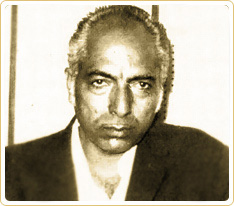 With about a hundred songs to my credit, I had already made in the film industry when a journalist asked me about my favourite music composer. Without a moment's hesitation, I replied, Madan Mohan. "I would love to work with him". I added "If any producer gives me the opportunity, I will do that film free of cost".
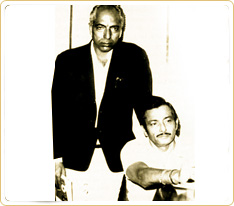 As the people in the studio noticed me entering the premises, they flocked around me, eager to know about the song. I explained that Madanji had given the melody and expected me to write the lyrics by 4.00 pm and then the song would be ready. After this the producer and the director insisted on hearing the melody. When I played it, they felt that it was too classical for the situation. They wanted a rhythmic pattern based melody. After listening to their comments I said "Madanji is in his music room. Please tell him what you feel so that he may make changes accordingly".
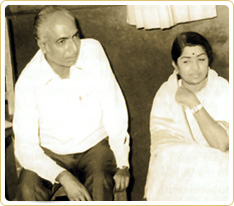 The songs from Dil Ki Rahen became very popular - especially Rasm-E-Ulfat which became a big hit. At that time, one of my friends from Pakistan was visiting India. He heard the song and liked it so much that he wanted to buy a record. As I did not have any, I enquired in several shops, but all replies were in negative. Finally I took him to HMV's office. There, an officer told me that the film's records have been cancelled and there are no chances of getting it. I was shocked. "The film has been released in only two territories. It is yet to be released in the entire country and you are saying that the records have been cancelled. Have you informed the producer about this?" The officer replied "We do not need to do this. As the records don't sell, they have been cancelled" I was not convinced. We had a heated argument. In fact, that was the period when Madanji had just passed away. Therefore, I did not know whom to address this problem to. Finally I contacted Lata Didi over the phone and narrated the entire episode. She assured me that she would look into the matter. Sure enough, within a week I got a call from HMV saying that the stock of Dil Ki Rahen records had arrived. "We shall have the records delivered at your home" the voice on the phone assured me. Sadly, due to such a regressive policy adopted by HMV vis-Ã -vis good music, several good quality songs have not reached music buffs.






